
Yemen: Acute Food Insecurity Situation for May - August 2025 and Projection for September 2025 – February 2026 (partial analysis)
South Sudan: Acute Food Insecurity Situation Projection Update for April - July 2025
In Luakpiny/Nasir and Ulang, which face a risk of Famine under a worst-case scenario, urgent and immediate action is needed for these populations, including large-scale and multi-sectoral response and the protection of humanitarian access to prevent the total collapse of livelihoods, increased starvation, death and possible deterioration into a full-blown Famine.
In addition, around 2.4 million people (18 percent of the analysed population) are in IPC AFI Phase 4 (Emergency) and nearly 5.2 million people (38 percent of the analysed population) are in IPC AFI Phase 3 (Crisis). These populations require urgent humanitarian response to meet food needs, protect lives and livelihoods, and reduce further deterioration.
Bangladesh: Acute Food Insecurity Current Situation for April and Projection for May - December 2025
Afghanistan: Acute Food Insecurity Situation for March - April 2025 and Projection for May - October 2025
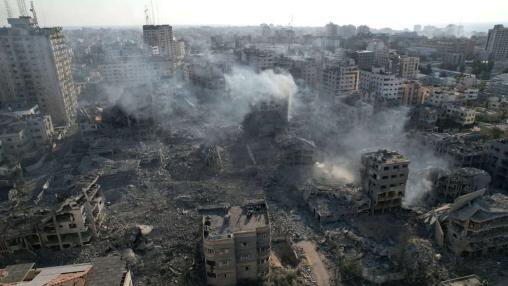
Gaza’s worsening food crisis and troubled path to reconstruction
As the Israel-Hamas conflict rages on in the Gaza Strip, the territory’s entire population of more than 2 million remains under threat of severe food crisis. The latest alert from the IPC Integrated Phase Classification for Acute Food Insecurity reports that one in five people in the Gaza Strip—upwards of 500,000—are on the brink of starvation (IPC Phase 5 Catastrophe) due to the March 18, 2025 end of the ceasefire and the resumption of blockades of humanitarian aid and commercial supplies.
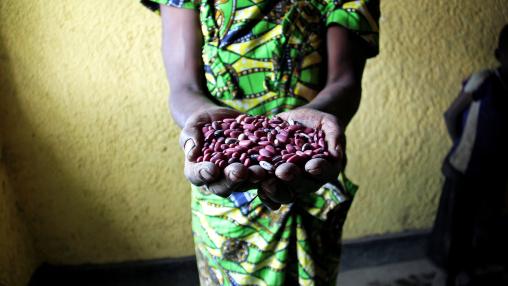
The world is nowhere near the goal of zero hunger by 2030 amid uncertain global development financing. What now?
In the wake of a series of recent crises that drove up global hunger and food insecurity, the world remains far off track in meeting Sustainable Development Goal 2 (SDG2)—ending hunger and malnutrition by 2030. Now, in a chaotic global environment of still more crises and complications, including cuts in official development assistance, what is the best course forward for governments and development organizations to address these urgent problems?
Tri-National Border Region of the Río Lempa: Acute Food Insecurity Situation March - May 2025 and Projections for June - September 2025 and October 2025 - February 2026
During the first projection period (June to September 2025) indicates a further deterioration during the seasonal hunger period, with 139,000 people (23 percent) projected to be in Phase 3 or above, including 15,000 in Phase 4 (Emergency). The Ch’orti’ region is expected to remain severely affected, with one in three people in Crisis or worse. This decline is largely attributed to the depletion of 70 percent of staple grain reserves, rising market prices, and reduced employment opportunities in the agricultural sector.
From October 2025 to February 2026, a slight improvement is anticipated, supported by seasonal labour demand, grain harvests, and remittances. Nevertheless, around 69,000 people (11 percent) will remain in Phase 3 or above, highlighting persistent vulnerabilities, especially in Ch’orti’, which is expected to maintain Phase 3 classification for 20 percent of its population
Gaza Strip: Acute Food Insecurity Situation for 1 April - 10 May 2025 and Projection for 11 May - 30 September 2025
From 11 May to the end of September 2025, the whole territory is classified in Emergency (IPC Phase 4), with the entire population expected to face Crisis or worse acute food insecurity (IPC Phase 3 or above). This includes 470,000 people (22 percent of the population) in Catastrophe (IPC Phase 5), over a million people (54 percent) in Emergency (IPC Phase 4) and the remaining half million (24 percent) in Crisis (IPC Phase 3). This marks a significant deterioration compared to the previous IPC analysis (released in October 2024) and the already dire conditions detected between 1 April - 10 May 2025. During this time, 1.95 million people (93 percent) were classified in Crisis or worse (IPC Phase 3 or above), including 244,000 people (12 percent) in IPC Phase 5 (Catastrophe) and 925,000 (44 percent) in IPC Phase 4 (Emergency).
Tanzania: Acute Food Insecurity Situation February - May 2025 and June - October 2025
Food security is expected to improve between June and October 2025, with 242,000 people projected in Crisis (IPC Phase 3) and nearly 1 million in Stressed (IPC Phase 2), supported by favourable rainfall and upcoming harvests. However, persistent risks such as dry spells, floods, high food prices, and crop and livestock diseases could reverse these gains.
Honduras: Acute Food Insecurity Situation for December 2024 - March 2025 and Projections for April - July 2025 and August - November 2025
In the first projected period, from April to July 2025, despite a slight improvement, the situation remains similar for an estimated 1.7 million people (17 percent of the population), who are likely to face high levels of acute food insecurity (IPC Phase 3 or above), with at least 92,000 people expected to be in Emergency (IPC Phase 4). During this period, while the dry season may be stimulating tourism in some parts of the country and food inflation shows signs of stabilisation, agricultural households are anticipated to face hardship due to depleted food stocks during the lean season. Moreover, the potential suspension of projects funded by USAID may negatively impact key sectors such as education, health, and migration, further increasing the vulnerability of the population.