



Food Security Trends and Resilience-Building Priorities
The new CGIAR series on Strengthening Food Systems Resilience kicks off with a seminar examining food security trends and the impacts of recent shocks to food systems. Speakers will highlight the need for renewed efforts to strengthen food systems resilience and identify priority investments and actions.
Johan Swinnen, Director General IFPRI; CGIAR Managing Director Systems Transformation Science Group: Overview of Food Security Trends and Impacts of Past Crises
Global Evidence for Improving Resilience and Food Security: Findings from the REAPER Agriculture-Led Growth and Nutrition-Sensitive Agriculture Evidence Gap Maps
Currently, an estimated 765 million individuals suffer from food insecurity worldwide. Climate change, recurring shocks, stressors, and crises threaten to exacerbate chronic vulnerability, hunger, and water insecurity. Although there is a vast evidence base examining global alleviation efforts, there are few systematic, end user-focused tools to help make sense of the growing literature.
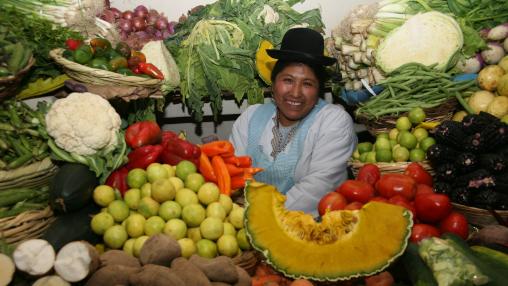
Global Food Policy Report 2023 Latin America launch: Policies to build resilience to shocks
Food systems have experienced a multitude of shocks in recent years that threaten food and nutrition security around the world. The Latin America and Caribbean region (LAC), which plays an important role in ensuring the stability of the global food system, has been hit hard by these disruptions. The region has accounted for 30% of deaths during the COVID-19 pandemic, yet makes up only 8% of the global population.
Virtual high-level event to launch the Global Report on Food Crises 2023
On 3 May 2023, the Global Network Against Food Crises will host a high-level virtual event to release the latest figures on how many people are facing acute hunger and malnutrition in crisis prone countries, in the Global Report on Food Crises 2023; the flagship publication of the Global Network Against Food Crises produced by the Food Security Information Network (FSIN) as a result of an analytical process involving 16 partners in the framework of the Global Network analytical efforts aimed at better understanding food crises.
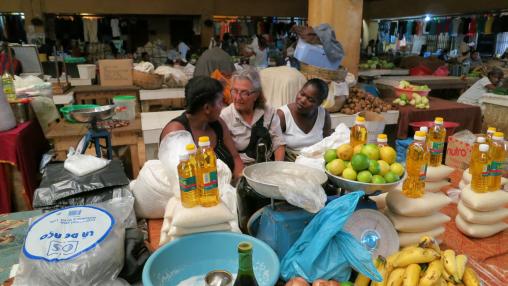
We must build food system resilience before the next crisis
In February 2022, news of Russia’s invasion of Ukraine dominated headlines around the world. Policymakers everywhere worried about the potential ripple effects of the invasion on the economic recovery from COVID-19, as well as on political stability — and food and nutrition security. These worries proved to be well-founded: International food prices spiked by nearly a third and fertilizer prices tripled.
The future of food and agriculture – Drivers and triggers for transformation
A new report by the UN Food and Agriculture Organization (FAO) on “The Future of Food and Agriculture: Drivers and Triggers for Transformation” aims to inspire strategic thinking and actions to transform agrifood systems toward a sustainable, resilient, and inclusive future.
The report analyses current and emerging drivers of agrifood systems and their possible future trends, including the issues at stake and the threats and problems facing future food production and consumption.
Enhancing Biodiversity and Resilience in Intensive Farming Systems: Results from an ETH Zürich-IFPRI Collaborative study
The growth of our global food production capacity over the past century is unprecedented, and has been facilitated by advances in crop breeding, mechanization, intensification, and the application of chemical inputs. This has come at a cost in terms of biodiversity loss and land degradation. This apparent trade-off between productivity and environment can be resolved through adoption of new farming practices that emphasize restoring and maintaining biodiversity on agricultural land to the benefit of soils and crops.
Ensuring a Focus on Women and Girls in the Global Food Crisis Response
As the world scrambles to address the global food crisis, proposed measures may fail to meet the specific needs of women and girls and might worsen existing gender inequalities. Crisis responses, such as the provision of fertilizer subsidies or vouchers, are more likely to reach male heads of household. Other measures may add to the already high labor burdens of women and girls. Governments may shift spending away from social programs that support vulnerable women and children.
Multidimensional digitally-enabled agricultural extension in Africa: Accelerating agricultural transformation in the face of global crises
African smallholders face many risks and uncertainty in the face of climate change and other shocks. Economic, health and environmental crises exacerbate resilience; take for example the COVID-19 pandemic and the escalating food and fertilizer prices resulting from the conflict in Ukraine. The unavailability and nearly four-fold price increase of fertilizer will affect food production and prices in Africa.
Responding to Food System Disruptions: Lessons Learned from a Global Coronavirus Food Safety Task Force
During the pandemic’s first year, a global task force of food safety experts was created using a “train the trainer” approach to provide risk mitigation outreach for the food system workforce in Bangladesh, Cambodia, Kenya, Nepal, and Senegal. Through live, online office hours and downloadable, translated resources, the team countered misinformation and shared best practices to keep food businesses open. The global food system continues to face challenges from conflict, climate change, and other disruptions.