


Famine in Gaza: How Research Can Aid Recovery and Prevent Future Food Crises
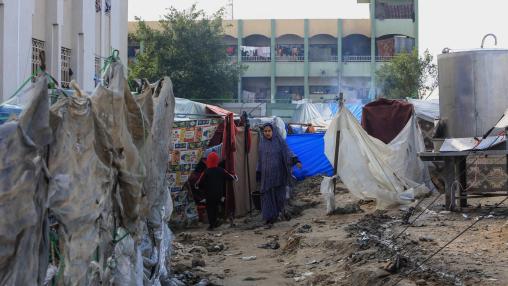
As Gaza continues to experience unprecedented food crisis, a new commentary published in Nature takes a look at how research can forecast the long-term impacts and help policymakers develop more effective humanitarian support networks and systems to ensure post-conflict resilience.
Reforming Agricultural Policies and Farm Support to Advance Sustainable Food System Transformation
In the recent COP28 Declaration on Sustainable Agriculture, Resilient Food Systems and Climate Action, world leaders affirmed that “agriculture and food systems must urgently adapt and transform in order to respond to the imperatives of climate change.” This declaration strengthens the growing global consensus that current food systems need urgent transformative change to end hunger and all forms of malnutrition and to make food production and delivery systems resilient and sustainable.
Navigating Sudan’s Conflict: Research Insights and Policy Implications
The conflict in Sudan has persisted since April 2023, with the violence intensifying in December 2023. As of February 2024, the crisis has displaced more than 7.8 million people internally, with an additional 1.7 million seeking refuge across borders. The violence has now spread into parts of central and eastern Sudan that were initially considered safe havens, resulting in more displacement, and further increasing pressure on states in eastern Sudan.
Disaster Events Lead to Trillions of Dollars in Agricultural Losses: New FAO Flagship Report Released
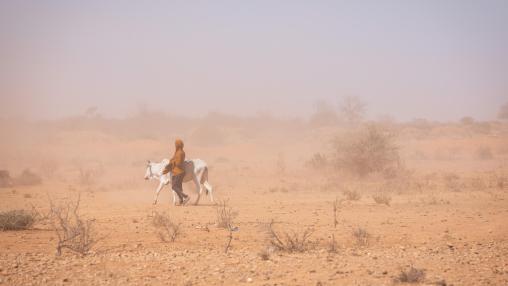
Over the past three decades, the world lost as much as $3.8 trillion in agricultural products as a result of disaster events, according to a new flagship report from the UN Food and Agriculture Organization. That equates to a loss of around 5 percent of global agricultural GDP per year and has serious implications for food security, agricultural livelihoods, and the sustainability of the global agrifood system.
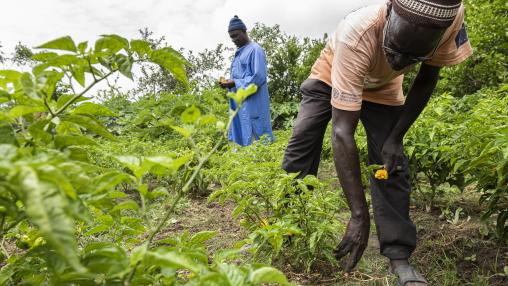
Sustainable agriculture, resilient food systems, and climate action: A post-COP28 look at policy imperatives at international and country levels
IFPRI participated in COP28 in late 2023 as part of a wider CGIAR delegation. Following on CGIAR’s five key takeaways from the global climate conference, this blog post—written by IFPRI Communications and Public Affairs Director Charlotte Hebebrand with input from IFPRI research units—reflects on the significance of the COP28 UAE Declaration on Sustainable Agriculture, Resilient Food Systems, and Climate Action through a policy lens.
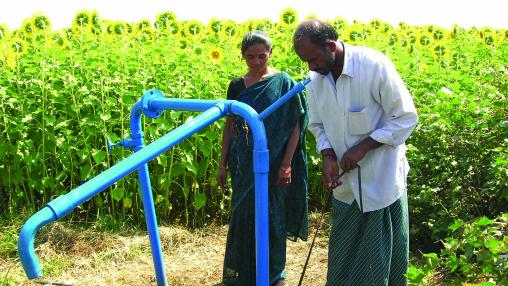
Climate-Smart Agriculture in South Asia and SSA: Unlocking Triple-Win Potential
South Asia and Africa south of the Sahara face significant and burgeoning threats to food security and economic well-being as a result of climate change. These challenges are further complicated by rapid population growth in both regions, leading to both an increased demand for food and increased environmental strains and the potential for unsustainable agricultural practices to boost production. Climate-smart agriculture (CSA) may be a feasible a solution to these challenges, if implemented appropriately and with local contexts in mind.
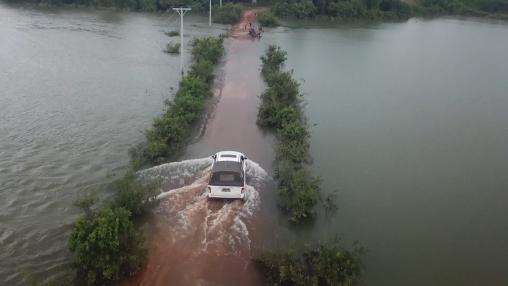
COVID-19 in South Asia: Lessons from a time of upheaval
In early 2022, Sudha Narayanan, Shahidur Rashid, and I (IFPRI), and Alex Winter-Nelson (University of Illinois) began pulling together a Special Issue for the journal Applied Economic Perspectives and Policy focused on COVID-19 in South Asia. Our goal was to distill forward-looking lessons for the developing world by drawing on similar and disparate country-level experiences. The issue is now available online and its 14 papers provide important lessons for future shocks.
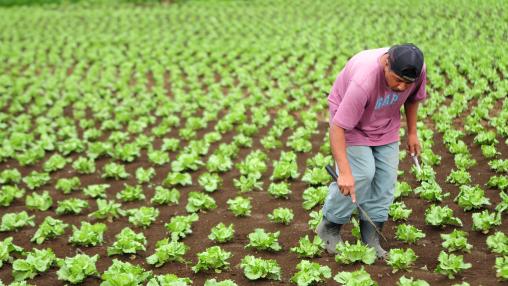
Food Security and Incomes in Guatemala During Food Crises
Since early 2020, Guatemala has faced a multitude of food security shocks: from the outbreak of the COVID-19 pandemic and resulting restrictions on movement and disruptions to agricultural trade to widespread flooding following several major tropical storms to skyrocketing staple food prices. A new article in World Development examines the immediate and longer term impact of these shocks on households’ incomes, diets, food security, and migration decisions, particularly in rural areas.

Strengthening Food Security Through Global Trade
With one in six people around the world almost entirely dependent on international trade to meet their food needs, agricultural trade can clearly play a pivotal role in both addressing and exacerbating food security challenges. While progress has been made to bring attention to food security needs in trade negotiations in recent years, harmful policies like temporary food export restrictions are still a common reaction to price spikes, market disruptions, and production shortfalls – shocks that are likely to become increasingly frequent due to climate change and ongoing conflicts.
Facilitating Anticipatory Action with Improved Early Warning Guidance
Worldwide, the number of people facing crisis-level or worse acute food insecurity has more than doubled since 2017. The 2023 Mid-Year Update of the Global Report on Food Crisis (GRFC) signals 238 million people in 48 countries with recent, comparable data are facing high levels of acute food insecurity, an increase by 10 percent from 2022. The GRFC provides trends and projections of food crises and informs the Global Network Against Food Crisis on where humanitarian and developmental assistance is most needed.