




Tensions in the Black Sea and regional droughts spark rising global wheat prices
After peaking in early 2022 following the Russian invasion of Ukraine, wheat prices have fallen over most of the past four years. This year’s U.S.-Israeli attacks on Iran and subsequent closure of the Strait of Hormuz sent energy and fertilizer prices soaring but had a relatively small impact on grain prices—grain exports were relatively unaffected, and fertilizer impacts are not likely to affect grain production for several months.
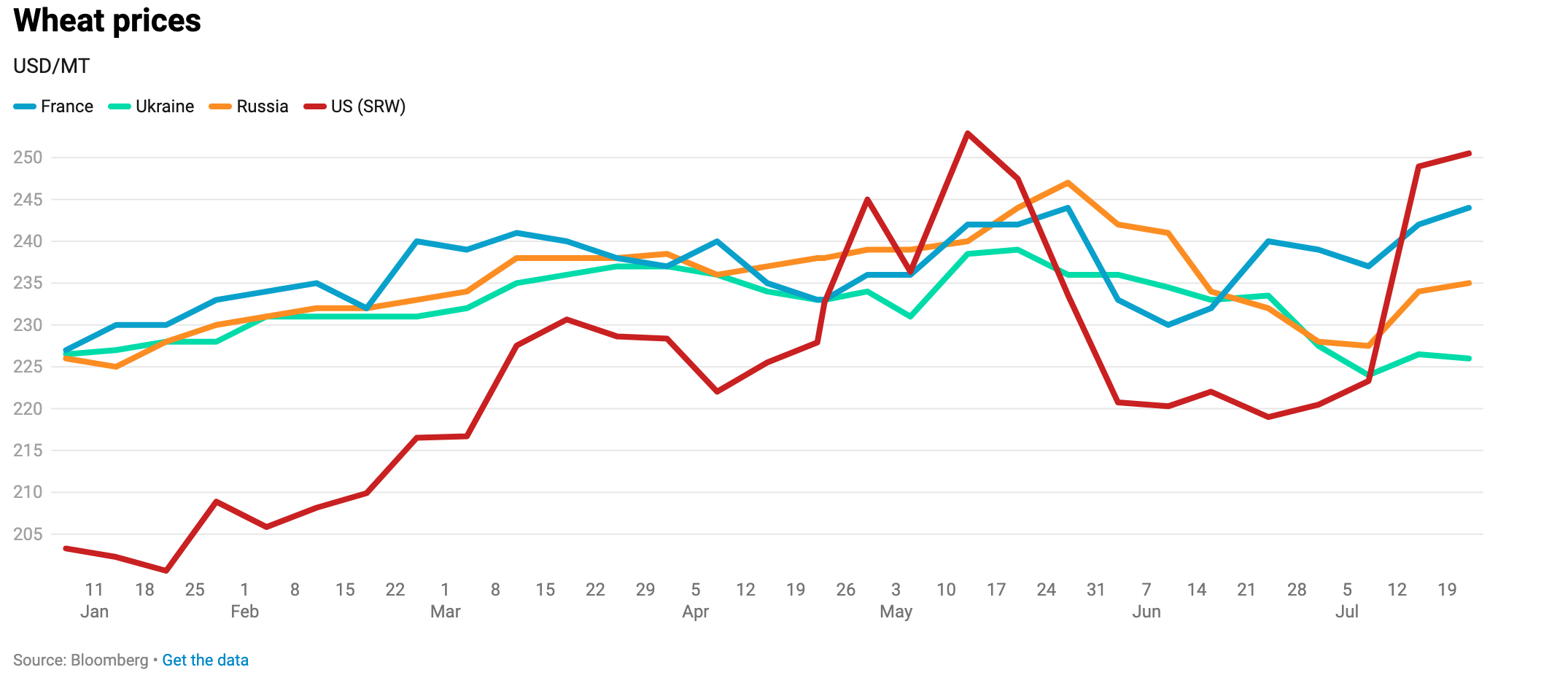
But now, wheat prices are on the rise again. Widespread drought has affected crop conditions in the Northern Hemisphere, and increased tensions in the Black Sea are again threatening wheat supplies. As a result, wheat prices have increased almost 25% above their January 2026 levels, reaching their highest levels in two years (Figure 1).
Figure 1
Tensions increase in the Black Sea
Figure 2
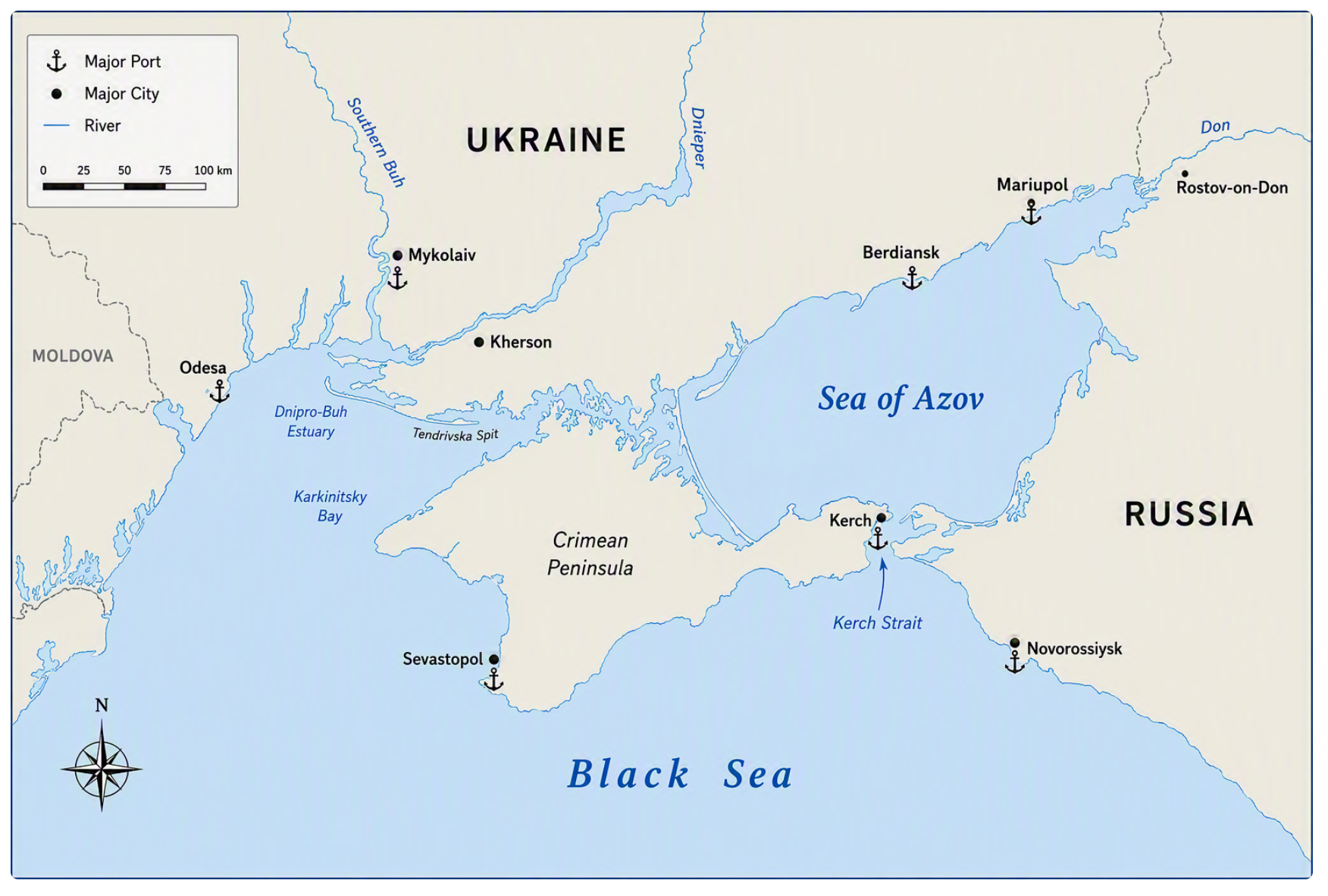
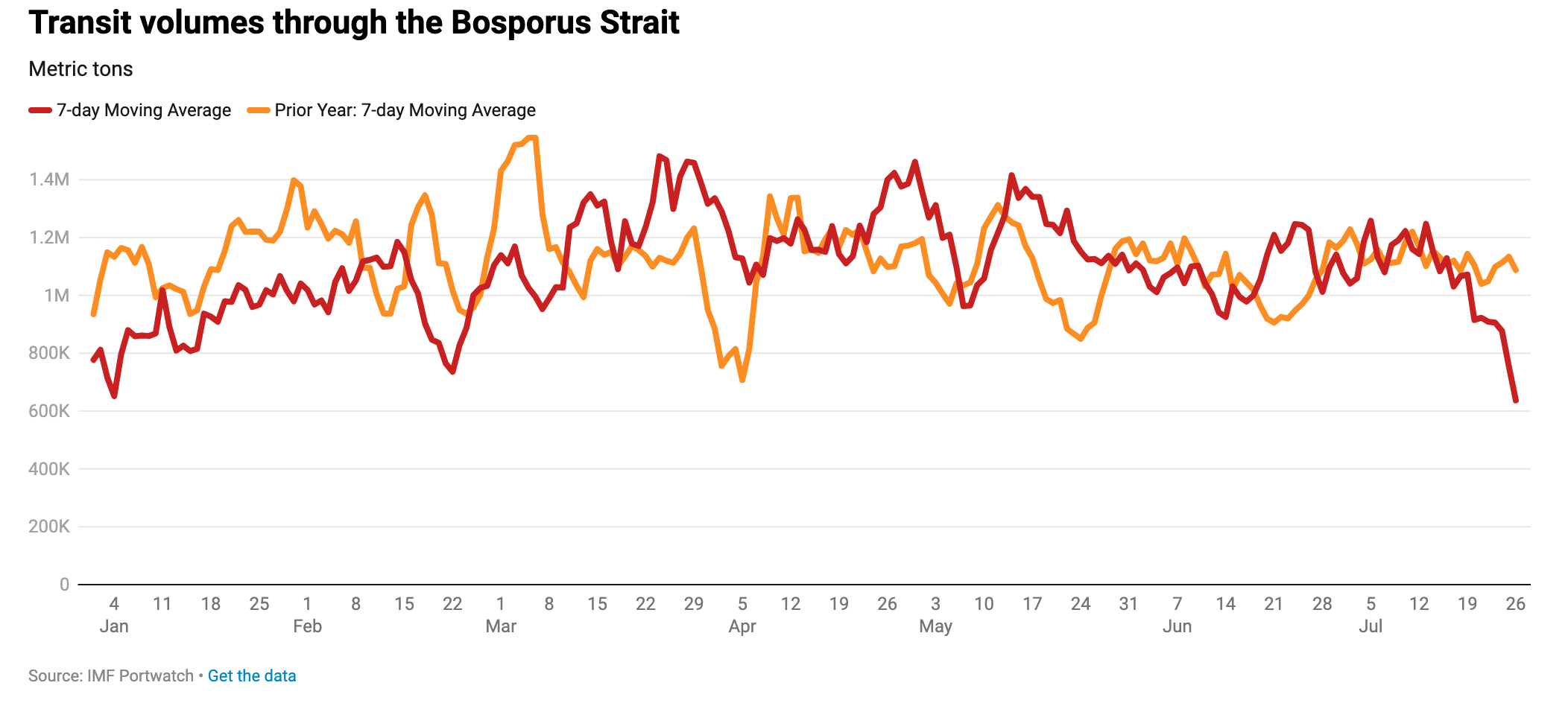
In recent weeks, Russian missile attacks on Odesa’s ports have disrupted Ukraine’s grain exports. Likewise, Ukraine drone attacks on vessels in the Sea of Azov have essentially halted shipments through the Kerch Strait, while attacks on the Russian ports of Novorossiysk and Taman have increased shipping costs out of Russian Black Sea ports. As a result, total shipments out of the Black Sea in late July were down more than 40% compared to levels a year ago (Figure 3).
Figure 3
Russia and Ukraine accounted for about 32% of global wheat trade in 2025/26, most of which transits the Black Sea. As we saw in 2022, Ukraine can ship some wheat overland by truck, rail, and barge via the Danube River to Romanian ports, but at significant cost. The overland route also created political tensions with Ukraine’s European Union neighbors, particularly Poland, Slovakia, Hungary, and Romania, as increased grain volumes depressed local prices and bid up costs for transportation services.
Likewise, Russia has limited shipping alternatives, at least in the short run. Russian ports on the Baltic and Arctic Seas are a long way from grain-producing regions and lack sufficient grain-loading facilities to handle the quantities shipped out through the Black Sea.
Continued disruptions could also damage other agricultural exports from Ukraine, including maize and sunflower oil, as well as Russian fertilizer exports such as urea and other nitrogen fertilizers, phosphate, and potash. This is a particular concern due to the continued closure of the Strait of Hormuz and Russia’s prominence as a fertilizer supplier.
Drought affects the 2026/27 wheat crop
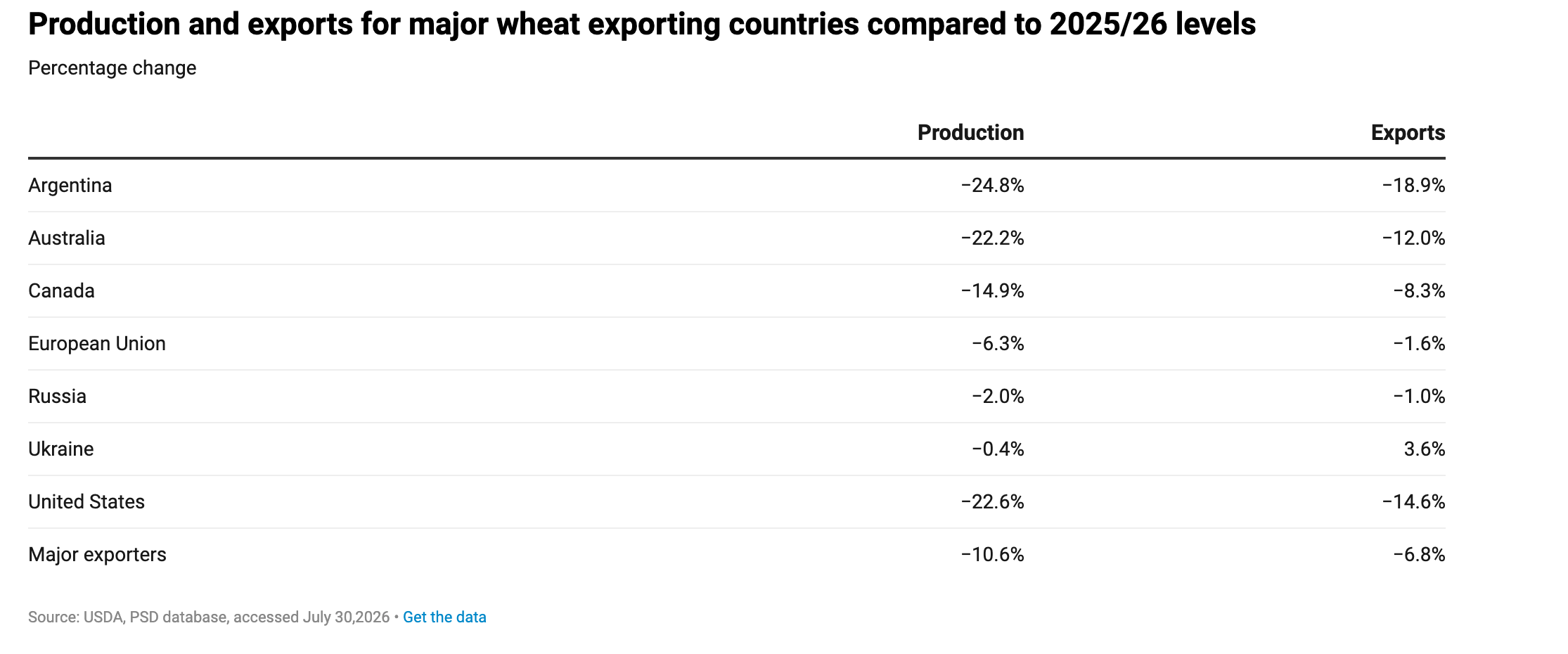
The increased tensions in the Black Sea coincide with a decline in global wheat crops due to drought. Table 1 shows the expected impact on wheat production and exports for the top seven wheat exporters, accounting for about 84% of the total. Overall, the U.S. Department of Agriculture (USDA) estimates that their combined production will be down 11% for the 2026/27 marketing year, while wheat exports are estimated to decline 7% from last year’s levels.
North America is a case in point. Total U.S. wheat production is estimated to fall by 26% and exports to decline by almost 15%. Much of the problem stems from persistent drought conditions in the southern U.S. plains, which has cut hard red winter (HRW) wheat production by an estimated 29%.
Canadian wheat production will decline by an estimated 15%, with wheat exports off by 8%, according to USDA. Canada’s wheat plantings were off this year due to the relative attractiveness of canola prices and high fertilizer costs.
Drought and high temperatures have also reduced wheat and maize yields in the EU. And while production prospects in Ukraine and Russia are relatively good compared to the rest of Europe, increased conflict over shipping routes makes it unclear how much wheat can be brought to market (the export estimates in Table 1 were as of July 10, 2026, and do not reflect the more recent increase in tensions).
Lastly, the emerging El Niño event later this year will likely reduce wheat production, mainly in the Southern Hemisphere, though by how much remains unclear. Australia’s wheat plantings for the 2026/27 crop are down 12% from last year’s levels due to expectations of dryness and increased fertilizer costs, and the USDA estimates exports will fall 12% in the same time frame.
USDA estimates Argentina’s wheat exports will decline by 19% in 2026/27, while crop estimates assume yields will fall back from 2025/26 record levels. However, Argentina may also benefit from increased rainfall due to El Niño.
Table 1
Drought and tensions in the Black Sea increase wheat price volatility
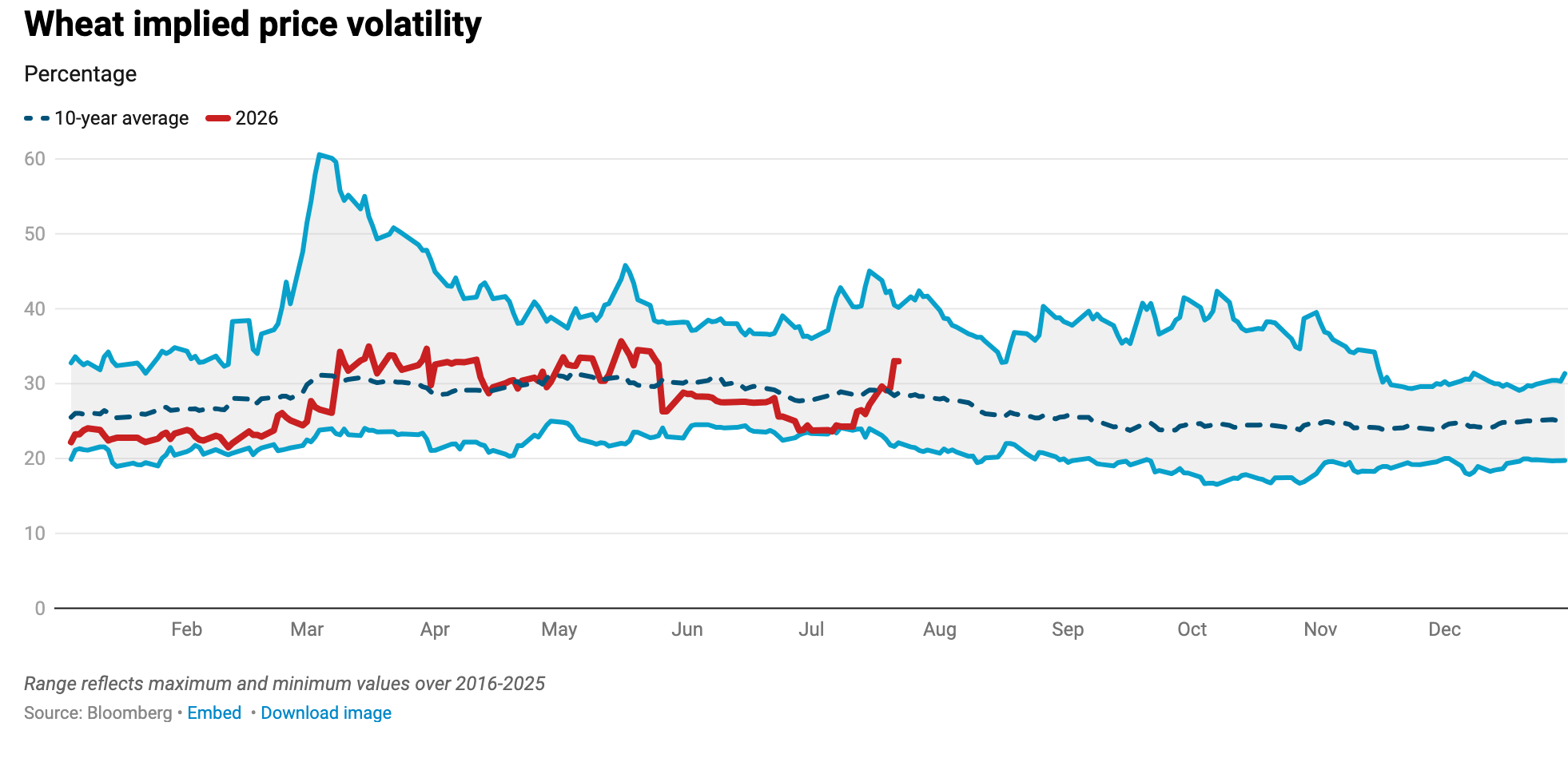
With smaller crops and export disruptions, wheat price volatility has increased. Figure 3 shows the fluctuations and recent rise in implied volatility (a measure of the underlying variability in futures market prices expected over the life of the contract) for wheat futures since January 1 compared to the range and average over the past 10 years.
Prior to the February 28 start of the Iran war, wheat price volatility was relatively low, remaining below the 10-year average and close to the 10-year lows. Once the Strait of Hormuz was closed, volatility increased, remaining above the 10-year average through May. Then, amid prospects of a lasting ceasefire, it fell to 10-year lows. Since July 1, markets have grown more volatile again due to shrinking global crops as well as to increasing tensions in both the Black Sea and Persian Gulf.
Figure 4
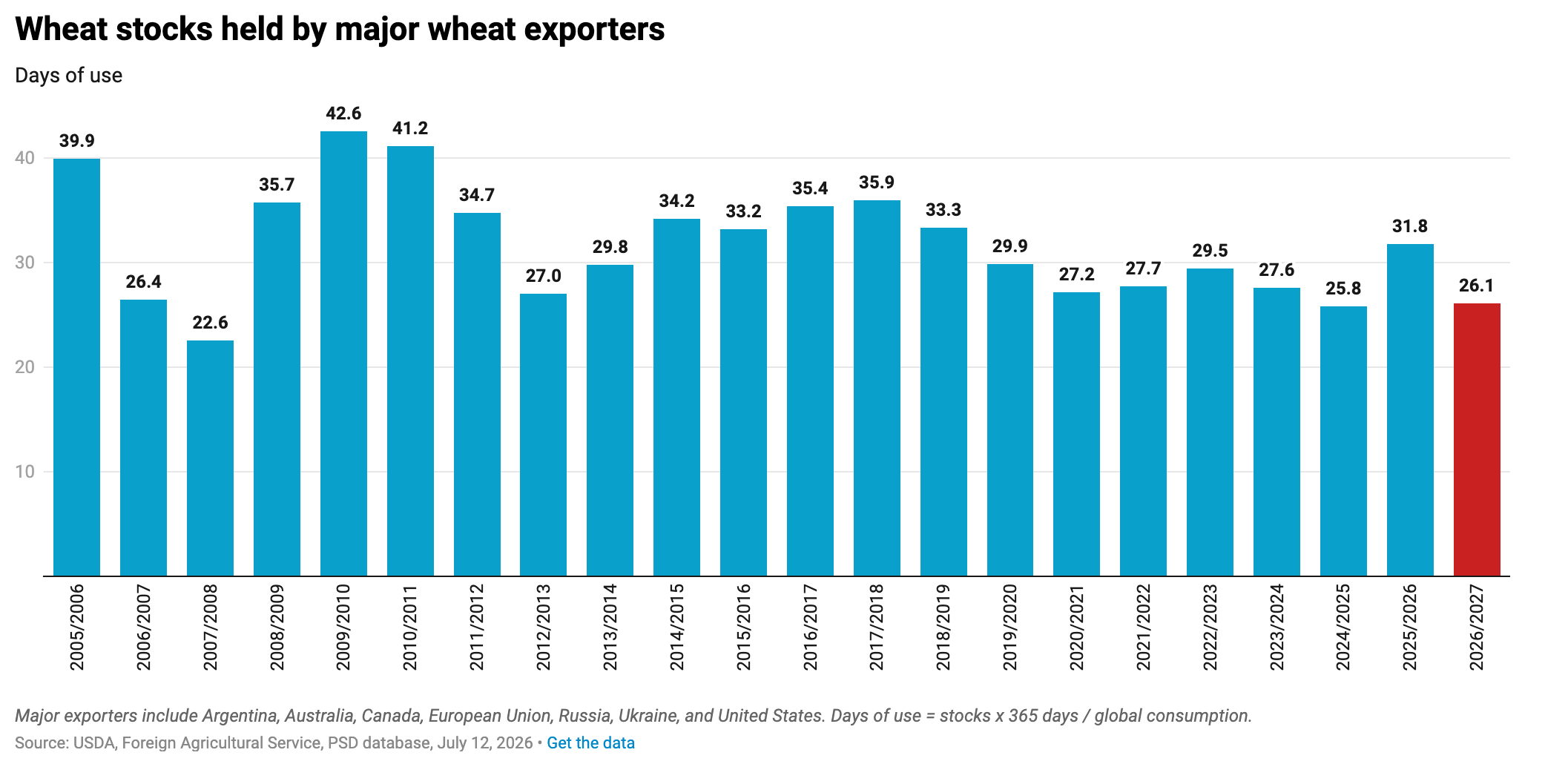
As a result of lower production prospects, wheat stocks are anticipated to fall for major exporting countries (Figure 5). If shipping from the Black Sea remains disrupted, the quantity of stocks available to the market could be even less in the short run.
Figure 5
Conclusions
Global wheat markets have entered a period of renewed uncertainty. Prices are rising, but are not approaching their 2022 peak in the first months of the Russia-Ukraine war. It is safe to say that this is not a repeat of that crisis, which imperiled global wheat supplies. Notably, that crisis passed relatively quickly. Prices collapsed within months, thanks to exemptions for food and fertilizer products from sanctions imposed against Russia by the U.S., EU, and others and the Black Sea Grain Initiative, an agreement allowing food exports from regional ports on both sides to resume.
Now, however, the factors driving price increases and volatility are different—more modest in impact, perhaps, but more numerous and interacting with each other in ways that are difficult to predict. The renewed targeting of Black Sea region port facilities and vessels carrying grain and fertilizer risks shorting global supplies; at the same time, wheat production is falling due to drought and reduced fertilizer availability, the latter a result of continuing tensions in the Persian Gulf. Recent events like Ukraine’s drone attacks on Russian ships in the Caspian Sea and renewed Houthi attacks on Red Sea shipping are contributing to price volatility as well. Global market prices are increasing and could increase at a faster clip in the months ahead if shipping continues to be disrupted.
Joseph Glauber is a Research Fellow Emeritus with IFPRI’s Director General’s Office. Opinions are the author’s.