



Food Security Resilience in Somalia
Compound Vulnerability and Food Security in Somalia
Anticipatory Interventions to Mitigate Adverse Food Security Impacts of Conflict in East and Central Africa
Innovative Methods to Strengthen Household Resilience to Price and Trade Shocks in East Africa
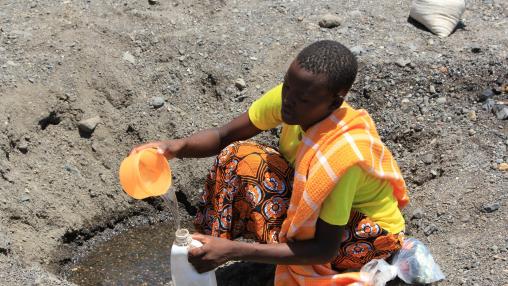
Food and Nutrition Crises Burgeon in Face of Conflict, Funding Cuts: GRFC Mid-Year Update Released
Hunger and food crisis have reached catastrophic levels in multiple places around the world, according to the Global Report on Food Crises Mid-Year Update. Famine has been confirmed in the Gaza Strip and the Sudan, with parts of South Sudan at risk of famine and Yemen, Haiti, and Mali experiencing catastrophic levels of hunger.
In all, 1.4 million people faced IPC Level 5 (Catastrophe) food insecurity and hunger as of August 2025.
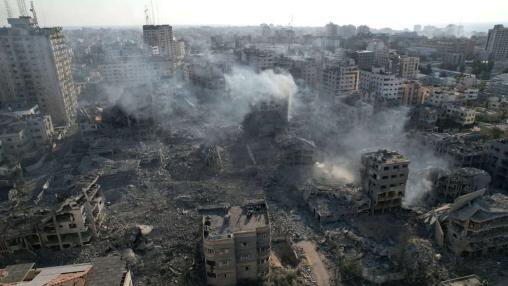
Gaza’s worsening food crisis and troubled path to reconstruction
As the Israel-Hamas conflict rages on in the Gaza Strip, the territory’s entire population of more than 2 million remains under threat of severe food crisis. The latest alert from the IPC Integrated Phase Classification for Acute Food Insecurity reports that one in five people in the Gaza Strip—upwards of 500,000—are on the brink of starvation (IPC Phase 5 Catastrophe) due to the March 18, 2025 end of the ceasefire and the resumption of blockades of humanitarian aid and commercial supplies.
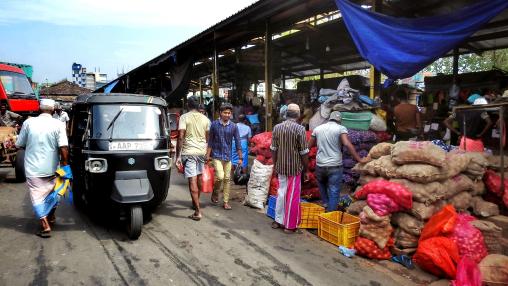
Rising food insecurity, waning humanitarian assistance: 2025 Global Report on Food Crises released
The world faced a stark inflection point in 2024, as the continued rise in the number of people facing crisis-to-catastrophic levels of acute food insecurity meets sharp reductions in funding for humanitarian assistance. The 2025 Global Report on Food Crises (GRFC), released today, reports that 295.3 million people across 53 countries/territories faced acute food insecurity in 2024. This represents a tripling of the number of people facing acute hunger since 2016 and a doubling since 2020 (Figure 1).
Figure 1
Reforming agricultural extension to build resilient and sustainable food systems: Insights from national and international consultations
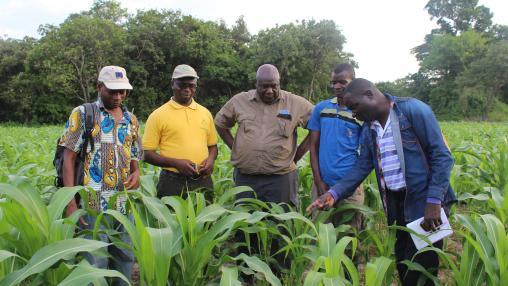
Food systems around the world face growing challenges. They must be transformed to sustainably feed a growing global population and made more resilient to shocks from extreme weather to conflict. Efforts on those fronts are increasingly interlinked—and depend on well-targeted local interventions.
Echoes of inflation: unpacking the drivers of food prices in Central America
In 2022, Central America experienced significant surge in food prices, a trend that was evident in Honduras. The country saw year-on-year monthly food inflation exceeding 12% from May 2022 to May 2023, with rates surpassing 17% in eight of those months.
In the following lines, we address the underlying causes of the food and fertilizer price surges, and the actions that can be taken to mitigate this situation in Central America.
Disaster Events Lead to Trillions of Dollars in Agricultural Losses: New FAO Flagship Report Released
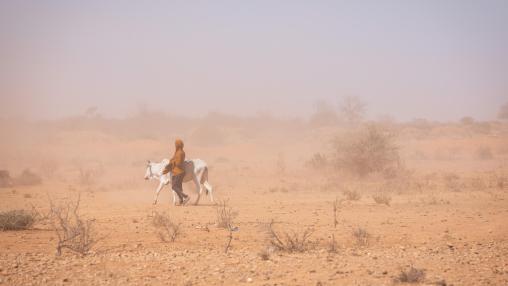
Over the past three decades, the world lost as much as $3.8 trillion in agricultural products as a result of disaster events, according to a new flagship report from the UN Food and Agriculture Organization. That equates to a loss of around 5 percent of global agricultural GDP per year and has serious implications for food security, agricultural livelihoods, and the sustainability of the global agrifood system.