

Category Type
Topic

Exploring good gaps for right-sizing food assistance: Methods, data challenges, and lessons learned

/sites/default/files/2026-05/ifpridp02414.pdf
Apr 24th, 2026
Accurate measurement of the depth of acute food insecurity remains a major gap in current global monitoring systems. While the Integrated Food Security Phase Classification (IPC) identifies the scale and geographic distribution of populations in crisis, it does not quantify the magnitude of food intake shortfalls faced by affected populations. This paper outlines an exploratory data exercise that tests three proxy approaches to estimating food gaps using available IPC and DIEM data. First, we derive back-of-envelope caloric deficit estimates by IPC phase using thresholds from the Household Economy Approach. Second, we assess whether widely used dietary diversity, experiential food insecurity, and coping capacity indicators can serve as proxies for calorie deficits by analyzing their cross-indicator correlations. Third, using microdata from FAO's DIEM surveys matched to IPC area phases, we estimate indicator-specific shortfalls using a Foster-Greer-Thorbecke gap framework and translate these into food assistance estimates. The results show that proxy indicators cannot be used interchangeably to estimate caloric shortfalls, reflecting weak cross-indicator correlations consistent with the existing literature. Within-phase heterogeneity is wide and data limitations are substantial. The paper documents these approaches and their limitations as an intermediate step. The paper provides several recommendations for improving data collection that would allow for more reliable food gap estimates using the framework presented in this paper, which in turn could then operationalized for humanitarian agencies to ‘right size’ and better target food assistance to populations facing acute food insecurity.

Food Security Resilience in Somalia

/sites/default/files/2026-03/Food%20Security%20Resilience%20in%20Somalia_FSP%20Research%20Brief%2001.pdf
Mar 24th, 2026
This research brief presents evidence that shifting attention from single shocks and population averages toward cumulative, multi-shock exposure can substantially improve anticipatory action, targeting, and the effectiveness of scarce humanitarian and development resources.

Compound Vulnerability and Food Security in Somalia
/sites/default/files/2026-03/Compound%20Vulnerability%20and%20Food%20Security%20in%20Somalia_FSP%20Working%20Paper%2001.pdf
Mar 18th, 2026
This study uses FAO Data in Emergencies (DIEM) survey data from 5,396 households to examine compound vulnerability and food security in Somalia. These households have experienced a variety of simultaneous shocks, including economic, agricultural, natural, conflict-related, and idiosyncratic occurrences. This study precisely measured these shocks using both parametric and non-parametric Multi-Shock Indices. Cumulative shock exposure was low to moderate on average (13.3–14.6 percent of the maximum achievable), but there was a sizable minority at high levels of exposure: 1,142 households surpassed mean-plus-one standard deviation under the parametric MSI, while 1,350 households exceeded the 75th percentile using the non-parametric MSI. High-risk households were concentrated within vulnerable socio-demographic categories (e.g., female-headed households, less educated household heads, and displaced households) and within certain regions (e.g., Woqooyi Galbeed, Lower Shabelle, and Mudug). Inadequate food security outcomes, such as lower Food Consumption Scores, inadequate dietary diversity, and the use of crisis or emergency coping mechanisms, were closely linked to high MSI values. The parametric MSI also indicated a non-linear amplification for greater levels of cumulative exposure; specific combinations of shocks, such as increasing food prices with animal disease or lost work, had particularly powerful, detrimental impacts. In order to help vulnerable households before shocks occur, these findings emphasize the significance of shock-sensitive and tailored interventions that connect numerous shock indicators to traditional food insecurity measures.
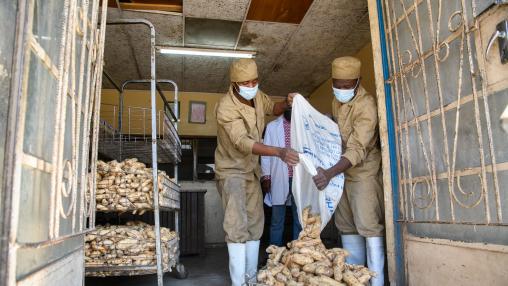
Two workers at Olympic Bakery in Malawi wear masks while pouring sweet potatoes from cloth sacks as they prepare sweet potato puree that is used for making sweet potato bread.

New E-Learning Courses Launched on FSP E-Learning Platform

The Food Security Portal E-learning Platform has launched two new courses: the French version of the Pro-WEAI (Women’s Empowerment in Agriculture Index) Foundations Module and a brand-new course focused on training Farmer Business School facilitators.

Ending Hunger by 2030: Policies and Costs

The number of undernourished people around the world rose from 653 million in 2015 to 690 million in 2019. According to a recent policy brief produced for the Food Systems Summit, more than 840 million people could suffer from by 2030, putting Sustainable Development Goal 2 – the eradication of hunger and malnutrition by 2030 – in serious jeopardy.  
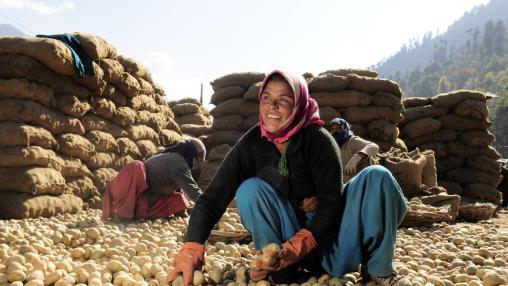
New E-Learning Course Launched on FSP E-Learning Platform

While women contribute significantly to global agricultural production, they often lack access to credit and finance, training and extension services, resources, and land rights, putting them at higher risk of malnutrition, food insecurity, and poverty. Increasing women’s empowerment in agriculture is a critical step in ensuring gender equity and reducing hunger for all.
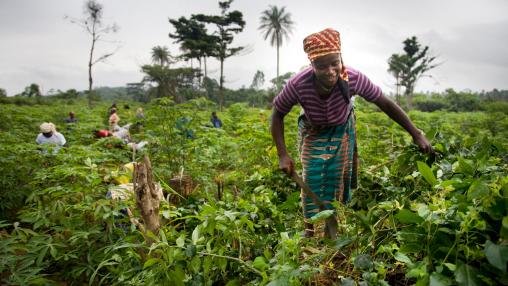
ReSAKSS-Africa Announces Enhanced Website

ReSAKSS-Africa (Regional Strategic Analysis and Knowledge Support System) website is now ready with enhanced features to track progress in implementing the Comprehensive Africa Agriculture Development Programme (CAADP), including the target of allocating 10 percent of national budgets to agriculture.
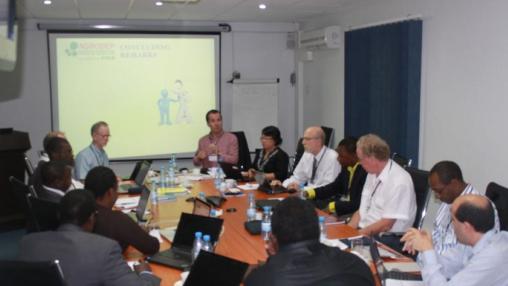
AGRODEP Announces 2013 Grant for Gaps in Research

The African Growth and Development Policy (AGRODEP) Modeling Consortium recently issued its second annual call for "Gaps in Research" Grants. These grants support research on emerging issues in Africa that have previously received little or no attention. The selected topic of this year’s grant is “Barriers to the expansion of agriculture and agroindustry in Africa”.
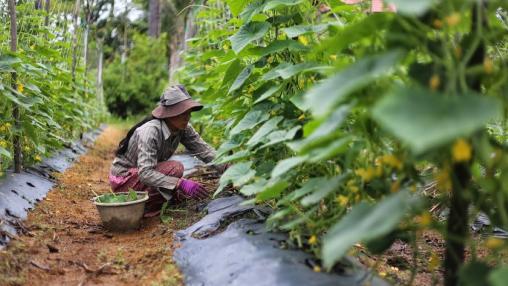
ReSAKSS-Asia Launches New Website

Asia is a region characterized by unique agricultural and economic opportunities and challenges. In recent years, many Asian countries have made great strides in transforming their agricultural systems and reducing their numbers of poor and malnourished. Despite this progress, however, the region remains home to most of the world's poor and hungry, and faces additional challenges in the form of environmental degradation and climate change.

Subscribe to Research