


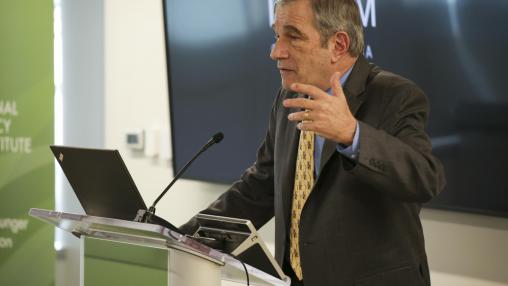
Interview: Unpacking integrated nutrition with IFPRI’s Harold Alderman
Research shows that an integrated nutrition approach—bringing together social protection programs, behavior change communication, agricultural policies, plant breeding, and early childhood interventions— is crucial to building food security and resilience. IFPRI Senior Research Fellow Harold Alderman’s recent research has focused on the connections between nutrition and early child development, and how nutrition and social protection programs contribute to long term economic growth.
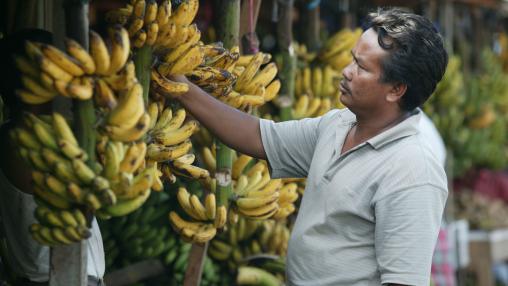
Addressing the nutrition challenge will take strong public-private collaboration, says new report
According to a new report from GAIN and the United States Council for International Business, one in three people worldwide suffer from either undernourishment or overweight/obesity. This malnutrition crisis is now global, affecting every country in the world. Experts have estimated that malnutrition results in the loss of at least 10% of global GDP every year, threatening economic development and poverty reduction.
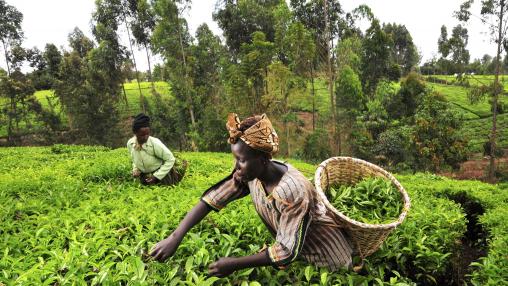
Finding Global Solutions to Global Challenges
Over 1,000 participants from more than 100 countries gathered in Berlin on May 28 and 29 for the 2018 Global Solutions Summit . The event, associated with the T20 (an engagement group of global think-tanks supporting the G20 process), brought together policymakers, private sector actors, and global thought leaders to discuss solutions to pressing global challenges like hunger and poverty, climate change, rapid globalization, economic and societal inequality and the erosion of democratic values.

Gender takes center stage at European Development Days
If we want to eradicate poverty, we need gender equality.
This was the key message from a joint panel event at European Development Days in Brussels June 6. Changing Women’s Lives in the Rural World brought together a panel of global experts to discuss how to move beyond conventional views of gender mainstreaming in development. It was hosted by the European Commission’s Directorate General for International Cooperation and Development (DEVCO) , as well as the governments of Finland, Germany, and the Netherlands.

Innovations in food systems: the key to human and planetary health
The world has made tremendous progress in improving food security and nutrition. The proportion of people experiencing hunger fell from 14.7% to 10.6% between 2000 and 2015. And we’ve made progress on undernutrition, with the prevalence of child stunting dropped from 40% to 23% between 1990 and 2015. Food systems – the technical, economic, social and environmental processes and actors through which we feed the world’s population – have played a huge role in this progress.
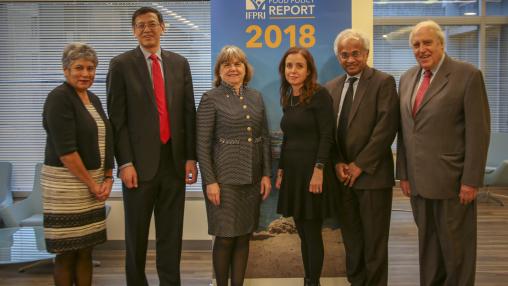
The Rise of Antiglobalization: 2018 Global Food Policy Report
The world will continue to face major challenges from political and economic uncertainty, conflict, and climate change in 2018 and beyond, and the rising trend of anti-globalization in some developed countries could hamper the ability of policymakers to respond to these challenges. The result could be slowed progress toward the Sustainable Development Goals (SDGs) and food and nutrition security, especially in developing countries.
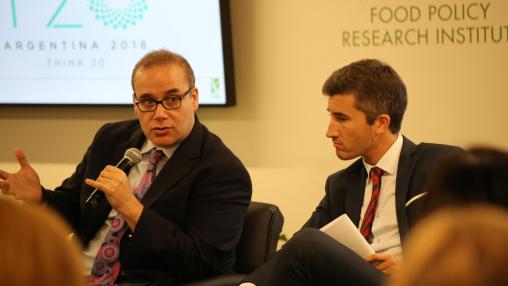
Policy seminar: Collaboration, sustainability must be key focus for Argentina G20
Argentine President Mauricio Macri has said that his country will place development, fairness, and sustainability at the forefront of this year’s G20 agenda, setting the theme of the Argentina G20 Presidency as “Building Consensus for Fair and Sustainable Development.” Experts recently gathered at IFPRI for a roundtable discussion on what these themes mean for food production systems, food security, and nutrition.
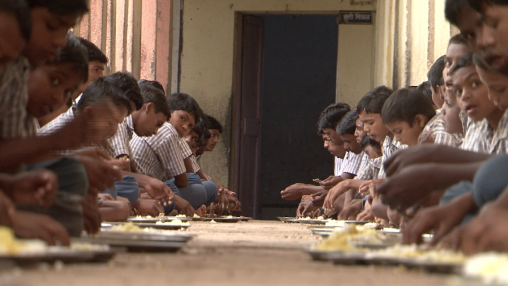
The evolution of nutrition policies: Evidence from India
The Green Revolution in Asia in the 1960s led to increased production of staple food crops like rice and wheat, which reduced hunger and boosted incomes and overall economic growth. However, according to a new study published in Global Food Security, this progress has been slow to translate from food security, focused on quantity of food, to nutrition security, focused on quality of food. As such, malnourishment in the form of chronic micronutrient deficiencies, overweight, and obesity continue to plague the region.
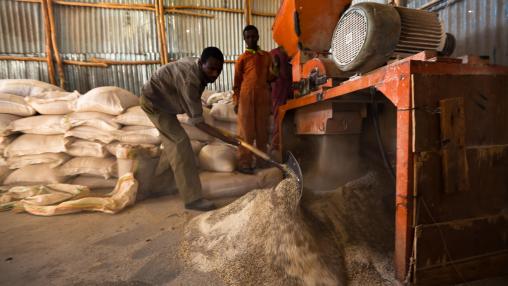
The Global Food System and Employment
The food system represents a vital economic sector, making up the largest source of employment (both self-employment and wage employment) in many developing countries. This system extends far beyond farm production to include a wide range of activities, including food processing, transportation, and retail. A new report from the World Bank examines how the global food system can be strengthened to fulfill the SDG goals of enhanced global employment and reduced poverty.
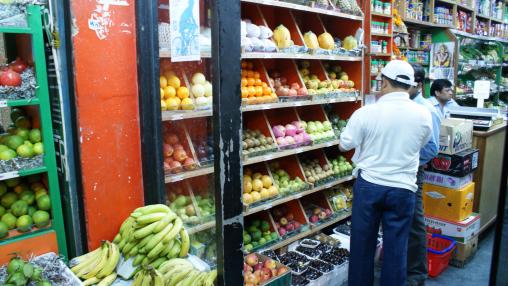
How the food system shapes nutritional outcomes
Recent years have observed a constant increase of obesity and overweight rates in developing countries, coexisting with lingering rates of wasting and stunting. Around the world, almost a billion people are suffering from hunger and over 2 billion have nutrition deficiencies, but at the same time, almost 2 billion are overweight or obese. The question of malnutrition has thus transitioned toward diet composition rather than just insufficient caloric intake.