

Global Maize Markets Experiencing Excessive Price Volatility
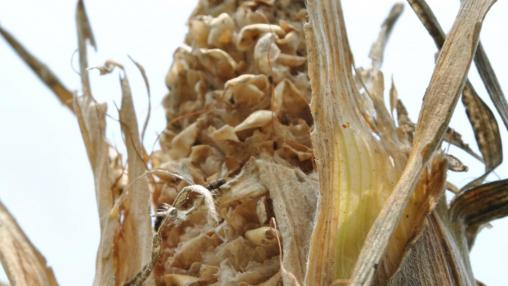
Global maize markets are currently experiencing a period of excessive price volatility. This is the first such period since June 2011 and can be largely attributed to conditions in the Midwest United States, which is experiencing the worst drought in 56 years. The United States is the world's largest maize exporter.

Global Soybean Prices Experiencing Excessive Volatility
Global soybean prices hit an all-time high on Monday in the wake of continuing hot, dry weather across the US Midwest. In addition to pushing prices higher, the drought and subsequent declining soybean stocks and lower expected exports are also causing a period of excessive price volatility in the commodity. It is the first time such a period has been seen for soybeans since December 2010.

High Maize and Soybean Prices Spur Food Security Fears
Global maize and soybean prices have skyrocketed in recent weeks and experts fear that price increases will be unabated as dry weather in the US Midwest continues for at least another week.

Scaling Up Agricultural Investment to Combat Poverty and Hunger
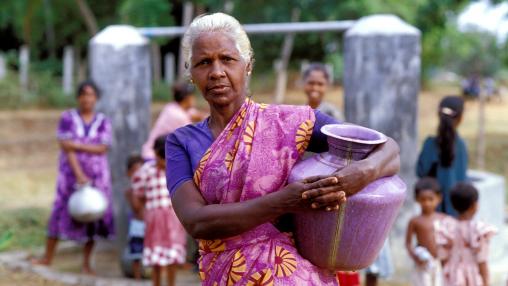
The 2007-2008 and 2010-2011 food crises saw not only an increase in food prices, but also an increase in poverty in many developing countries. A staggering 1.2 billion people live in extreme poverty worldwide, and 70 percent of those poor live in rural areas and depend in some capacity on agriculture to survive. For these poor populations, there is an urgent need for strong investment in agricultural growth to increase production, reduce hunger, and help lift them out of crushing poverty.
New Global Atlas Examines Potential for Increased Agricultural Productivity
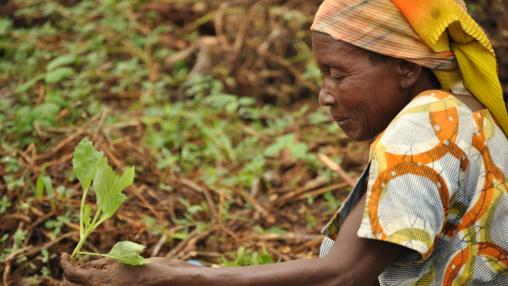
Agricultural productivity is an increasingly hot topic worldwide, particularly after last week's G20 Summit (read the Interagency Report on increasing agricultural production ). If current estimates of global population growth are correct, farmers will need to roughly double the world's current food production in order to feed 9 billion people by 2050. Climate change presents an additional challenge, with changing weather patterns and severe weather events undermining farmers' ability to even maintain current production levels.
Could Weather Indexed Insurance Replace Food Aid to Africa?
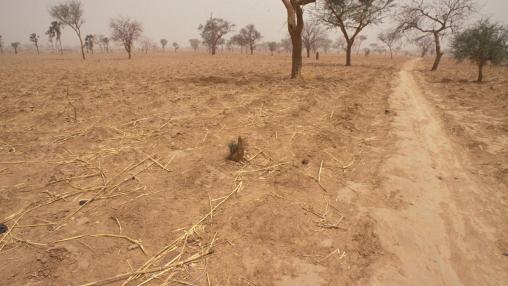
The 2011 Horn of Africa food crisis brought the stark reality of weather-related shocks to the world’s attention, as the region’s worst drought in 60 years led to widespread crop failures and skyrocketing food prices and plunged millions of people into severe hunger and malnutrition. An early, effective response could have prevented the kind of widespread tragedy seen in the Horn of Africa in 2011, reducing mortality rates and malnutrition of young children, as well as helping families get back on their feet after the drought.
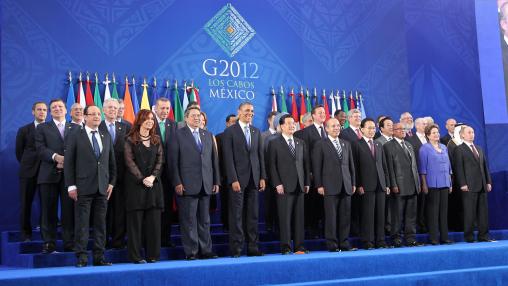
New Homepage Feature Tracks Mexico G20, Highlights Agriculture and Food Security
With the world facing continued population growth and the specter of climate change, food prices and food security are issues of growing global importance. The 2007-2008 and 2010-2011 food price crises have had lasting impacts on the face of the global food security environment; since 2001, food price volatility has been at its highest level in 50 years, and the uncertainty caused by this volatility is particularly detrimental for the world’s poor.

AGRODEP Announces First Annual Call for Competitive Grant Proposal
While Africa is the center of much development and policy research, many emerging issues still do not receive the necessary attention and investment. The African Growth and Development Policy (AGRODEP) Modeling Consortium has issued its first annual call for competitive grant proposals to address such gaps in research. The AGRODEP team has selected as this year's topic Foreign Direct Investment in Land (FDI), Land Markets and Land Institutions, and Development of the Agricultural Sector in Africa. Proposals can address any or all of the aspects of this topic.
IFPRI and the National Institute for Agronomic Study and Research Announce Call for Papers on Food Security in DRC
To revisit some of the most pressing issues to have emerged from the 2011 Policy Dialogue on the Importance of Statistical Information Systems in Improving Food Security in the Democratic Republic of the Congo, the International Food Policy Research Institute (IFPRI) and the National Institute for Agronomic Study and Research (INERA) are announcing a joint Call for Papers (CFP). IFPRI and INERA call for the development of two papers.

IFPRI and the Economic and Policy Research Centre Announce Call for Papers on Food Security in Uganda
To revisit some of the most pressing issues to have emerged from the 2011 Policy Dialogue on Food Security Information Systems in Uganda, the International Food Policy Research Institute (IFPRI) and the Economic and Policy Research Centre (EPRC) are announcing a joint Call for Papers (CFP). IFPRI and EPRC call for the development of two papers.