

Category Type
Topic
Kenya: Acute Malnutrition Situation April 2025 - July 2025 and Projection for August 2025 - March 2026 (ASAL)
/sites/default/files/2025-09/IPC_Kenya_Acute_Food%20_Insecurity_Acute_Malnutrition_Jul2025_Jan2026_Report.pdf
Sep 8th, 2025
Acute malnutrition remains a major concern in Kenya, especially across the arid and semi-arid regions. Acute malnutrition (AMN) remained stable in the 27 analysed areas in Kenya's arid and semi-arid lands (ASALs) between April and July 2025. However, elevated levels have been detected in 15 areas, with 11 areas classified in IPC AMN Phase 4 (Critical), four areas classified in IPC AMN Phase 3 (Serious), seven areas classified in IPC AMN Phase 2 (Alert) and five areas in IPC AMN Phase 1 (Acceptable). In the projection period (August to October 2025), acute malnutrition is expected to deteriorate in eight areas, improve in three areas and remain stable in 15 areas. The number of children aged 6 to 59 months requiring treatment between April 2025 and March 2026 is estimated to be 741,883, which is a slight improvement (2.5 percent reduction) compared to 2024. Food gaps, high disease burden, limited access to health services, limited water and access to sanitation services, and reduced humanitarian funding continue to drive acute malnutrition.
Uganda: Acute Malnutrition Situation April - September 2025 and Projection for October 2025 - March 2026
/sites/default/files/2025-09/IPC_Uganda_Acute_Food_Insecurity_Acute_Malnutrition_Refugee_Population_Apr2025_Feb2026_Snapshot_1.pdf
Sep 8th, 2025
Approximately 428,000 children aged 6–59 months and 84,000 pregnant or breastfeeding women are suffering or expected to suffer from acute malnutrition across 43 districts in Uganda between March 2025 to February 2026 and require urgent nutrition support or treatment. The highest is reported in Karamoja with three districts classified in IPC AMN Phase 4 (Critical) and four districts classified in IPC AMN Phase 3 (Serious).
Key factors fuelling acute malnutrition include high climate vulnerability—driven by arid to semi-arid conditions and prolonged dry spells that restrict access to reliable and sufficient water—intersects with poor agro-ecological potential, including marginal pastoral and agricultural zones characterized by rocky, infertile soils. Livelihoods are predominantly pastoralist, supplemented by limited single-season crop farming, but remain constrained by low dietary diversity and recurring seasonal food insecurity.
Key factors fuelling acute malnutrition include high climate vulnerability—driven by arid to semi-arid conditions and prolonged dry spells that restrict access to reliable and sufficient water—intersects with poor agro-ecological potential, including marginal pastoral and agricultural zones characterized by rocky, infertile soils. Livelihoods are predominantly pastoralist, supplemented by limited single-season crop farming, but remain constrained by low dietary diversity and recurring seasonal food insecurity.
Mozambique: Acute Food Insecurity Situation for April - September 2025 and Projection for October 2025 - February 2026
/sites/default/files/2025-09/IPC_Mozambique_Acute_Food_Insecurity_Malnutrition_Apr2025_Mar2026_Snapshot_English_0.pdf
Sep 11th, 2025
Approximately 2.09 million people are experiencing high levels of acute food insecurity (IPC Phase 3 or above) between April and September 2025, with 143,000 people experiencing Emergency levels (IPC Phase 4), characterised by large food gaps and high levels of acute malnutrition. The remaining 1.95 million people are experiencing IPC Phase 3 (Crisis) conditions.
The key drivers of the situation include climatic shocks—drought and irregular rainfall—in the southern and central areas of the country, as well as high food prices. In recent months, the northern part of the country has experienced a cessation of conflict and a degree of stabilisation, enabling the return of approximately 700,000 people. Despite this, more than 9,000 people remain internally displaced in Cabo Delgado. Displaced households and households in the process of returning to safe areas often face significant challenges, including limited access to agricultural production, livestock, and other forms of income generation. Their capacity to resume sustainable livelihoods remains severely constrained, leaving many entirely reliant on humanitarian food assistance. Meanwhile, sporadic attacks continue to occur in the districts of Macomia and Quissanga, where conflict continues to undermine security and recovery efforts.
The key drivers of the situation include climatic shocks—drought and irregular rainfall—in the southern and central areas of the country, as well as high food prices. In recent months, the northern part of the country has experienced a cessation of conflict and a degree of stabilisation, enabling the return of approximately 700,000 people. Despite this, more than 9,000 people remain internally displaced in Cabo Delgado. Displaced households and households in the process of returning to safe areas often face significant challenges, including limited access to agricultural production, livestock, and other forms of income generation. Their capacity to resume sustainable livelihoods remains severely constrained, leaving many entirely reliant on humanitarian food assistance. Meanwhile, sporadic attacks continue to occur in the districts of Macomia and Quissanga, where conflict continues to undermine security and recovery efforts.
Uganda: Acute Food Insecurity Situation June - July 2025 and Projection for August 2025 - February 2026
/sites/default/files/2025-09/IPC_Uganda_Acute_Food_Insecurity_Acute_Malnutrition_Refugee_Population_Apr2025_Feb2026_Snapshot.pdf
Sep 8th, 2025
An estimated 1.42 million people in Uganda are expected to face high levels of food insecurity between August 2025 and February 2026. This is an improvement compared to the current analysis period (April to July 2025) when approximately 2.46 million people were classified in IPC Phase 3 or above.
The improvement is largely due to the expected strong harvest season. However, food insecurity remains persistent in Karenga, Napak, Kaabong, Moroto, and Kotido, where between 30 and 45 percent of the population are still classified in IPC Phase 3 or above. It remains essential to implement activities aimed at reducing the food consumption deficits of food insecure populations as well as strengthening their resilience capacities.
The improvement is largely due to the expected strong harvest season. However, food insecurity remains persistent in Karenga, Napak, Kaabong, Moroto, and Kotido, where between 30 and 45 percent of the population are still classified in IPC Phase 3 or above. It remains essential to implement activities aimed at reducing the food consumption deficits of food insecure populations as well as strengthening their resilience capacities.
Kenya: Acute Food Insecurity Situation for July - September 2025 and Projection for October 2025 - January 2026 (ASAL)
/sites/default/files/2025-09/IPC_Kenya_Acute_Food%20_Insecurity_Acute_Malnutrition_Jul2025_Jan2026_Report_0.pdf
Sep 8th, 2025
Nearly 1.8 million people are experiencing high levels of acute food insecurity, classified as IPC Phase 3 or above (Crisis or worse), between July and September 2025 (lean season). Of this total, around 179,000 people are experiencing IPC Phase 4 (Emergency) conditions, while the remaining population is classified in IPC Phase 3 (Crisis). The worst-affected areas are four arid counties—Baringo, Mandera, Marsabit, and Turkana.
The current situation has improved compared to the period between February and March 2025 when 2.2 million people faced high levels of acute food insecurity. The improvement is attributed to above-average rainfall, which positively impacted crop and livestock production, and water availability and access, leading to slightly improved household food security in the arid and semi-arid lands (ASALs).
During the projection period (October 2025 to January 2026), the food security situation is expected to deteriorate, particularly during the short rains season (October–December 2025). An estimated 2.1 million people are expected to face high levels of acute food insecurity (IPC Phase 3 or above). The deterioration is mainly driven by forecasted below-average rainfall, which is expected to further affect staple food prices, alongside conflicts over resource management. Compared to the same period last year, the population projected in Phase 3 or above has increased from 11 to 13 percent with around 2 million people expected to be in Phase 3, and approximately 160,000 people in Phase 4.
The current situation has improved compared to the period between February and March 2025 when 2.2 million people faced high levels of acute food insecurity. The improvement is attributed to above-average rainfall, which positively impacted crop and livestock production, and water availability and access, leading to slightly improved household food security in the arid and semi-arid lands (ASALs).
During the projection period (October 2025 to January 2026), the food security situation is expected to deteriorate, particularly during the short rains season (October–December 2025). An estimated 2.1 million people are expected to face high levels of acute food insecurity (IPC Phase 3 or above). The deterioration is mainly driven by forecasted below-average rainfall, which is expected to further affect staple food prices, alongside conflicts over resource management. Compared to the same period last year, the population projected in Phase 3 or above has increased from 11 to 13 percent with around 2 million people expected to be in Phase 3, and approximately 160,000 people in Phase 4.
Madagascar: Acute Food Insecurity Situation for May - September 2025 and Projections for October 2025 - January 2026 and January - April 2026
/sites/default/files/2025-09/IPC_Madagascar_Acute_Food_Insecurity_Malnutrition_May2025_Apr2026_Snapshot_English.pdf
Sep 9th, 2025
The acute food insecurity situation in Madagascar remains deeply concerning. Approximately 1.2 million people—representing 13 percent of the population in the districts analysed—are currently experiencing high levels of acute food insecurity, classified in IPC Phase 3 or above. This includes 29,000 people in IPC Phase 4 (Emergency) and 1.17 million in IPC Phase 3 (Crisis).
Conditions are expected to deteriorate during the first projection period (October 2025 to January 2026), with 1.5 million people projected to face Phase 3 or above, including a sharp increase of 84,000 people in Phase 4. This deterioration is primarily driven by an early lean season, resulting in poor harvests and elevated food prices, which undermine both availability and accessibility of food.
A further decline is anticipated in the second projection period (February to April 2026), with nearly 1.64 million people expected to face high levels of acute food insecurity, including 110,000 people in Phase 4 (Emergency). Alarmingly, marginalised and low-income rural households are disproportionately affected, with 5 to 10 percent of the population in some areas projected to be in Phase 4, even during the peak harvest season.
This worsening crisis is driven by a combination of recurring climate shocks (including droughts, floods, and cyclones), major agricultural disruptions (such as delayed planting and locust infestations), declining purchasing power, and limited access to essential services and humanitarian assistance. These factors are compounded by chronic poverty and fragile community resilience, placing millions at heightened risk.
Conditions are expected to deteriorate during the first projection period (October 2025 to January 2026), with 1.5 million people projected to face Phase 3 or above, including a sharp increase of 84,000 people in Phase 4. This deterioration is primarily driven by an early lean season, resulting in poor harvests and elevated food prices, which undermine both availability and accessibility of food.
A further decline is anticipated in the second projection period (February to April 2026), with nearly 1.64 million people expected to face high levels of acute food insecurity, including 110,000 people in Phase 4 (Emergency). Alarmingly, marginalised and low-income rural households are disproportionately affected, with 5 to 10 percent of the population in some areas projected to be in Phase 4, even during the peak harvest season.
This worsening crisis is driven by a combination of recurring climate shocks (including droughts, floods, and cyclones), major agricultural disruptions (such as delayed planting and locust infestations), declining purchasing power, and limited access to essential services and humanitarian assistance. These factors are compounded by chronic poverty and fragile community resilience, placing millions at heightened risk.
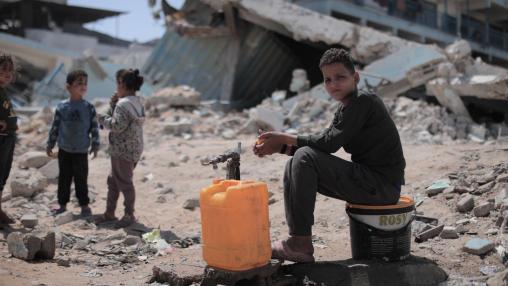
Famine Confirmed in Gaza Strip
The chance to prevent widespread famine in the Gaza Strip has passed, according to the IPC Famine Review Committee (FRC). The prolonged food crisis in Gaza reached an unprecedented and devastating level in July and August, with the FRC confirming famine in Gaza Governate and projecting famine thresholds to be crossed in Deir al-Balah and Khan Younis Governates in the coming weeks. This latest update places more than half a million people at risk of starvation.
Gaza Strip: Acute Food Insecurity Situation for 1 July - 15 August 2025 and Projection for 16 August - 30 September 2025
Aug 22nd, 2025
As of 15 August 2025, Famine (IPC Phase 5)—with reasonable evidence—is confirmed in Gaza Governorate. After 22 months of relentless conflict, over half a million people in the Gaza Strip are facing catastrophic conditions characterised by starvation, destitution and death. Another 1.07 million people (54 percent) are in Emergency (IPC Phase 4), and 396,000 people (20 percent) are in Crisis (IPC Phase 3). Between mid-August and the end of September 2025, conditions are expected to further worsen with Famine projected to expand to Deir al-Balah and Khan Younis. Nearly a third of the population (641,000 people) are expected to face catastrophic conditions (IPC Phase 5), while those in Emergency (IPC Phase 4) will likely rise to 1.14 million (58 percent). Acute malnutrition is projected to continue worsening rapidly. Through June 2026, at least 132,000 children under five are expected to suffer from acute malnutrition—double the IPC estimates from May 2025. This includes over 41,000 severe cases of children at heightened risk of death. Nearly 55,500 malnourished pregnant and breastfeeding women will require urgent nutrition response. Conditions in North Gaza Governorate are estimated to be as severe—or worse—than in Gaza Governorate. However, limited data prevents IPC classification of this area, highlighting the urgent need for access and comprehensive assessments. Rafah Governorate was not analysed given indications that it is largely depopulated.
Eswatini: Acute Food Insecurity Situation for June - September 2025 and Projection for October 2025 - March 2026
Jul 31st, 2025
Between June and September 2025, 193,000 people (16 percent of the population) in Eswatini are experiencing high levels of acute food insecurity and loss of livelihood, classified in IPC Phase 3 or above (Crisis or worse). Although food security has improved significantly compared to the same period last year, the situation is expected to deteriorate during the projection period (October 2025 to March 2026). An estimated 259,000 people (21 percent of the population) are likely to face Crisis or worse conditions, representing an increase of 66,000 people compared to the current period. The Lowveld Cattle and Maize (LCM) zone continues to experience the worst food security conditions, with over 72,000 people in Phase 3 or above, followed by the Dry Middleveld (DMV) and the Lubombo Plateau (LP) with nearly 30,000 people and more than 9,400 people in Phase 3 or above respectively. These numbers demonstrate persistently high food insecurity levels.
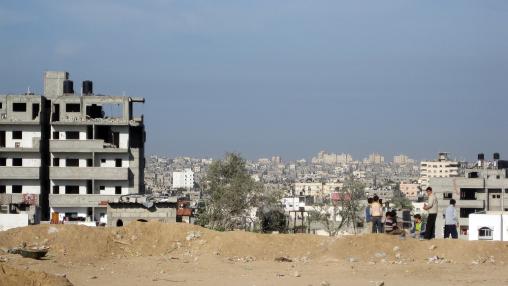
Gaza now facing "worst-case scenario"
The population of the Gaza Strip is facing unprecedented crisis, according to the latest IPC alert released yesterday. Calling the situation the “worst-case scenario,” the alert reports famine-level food consumption throughout most of the territory and acute malnutrition in Gaza City.