


Bridging Research and Policy: Towards a More Coordinated Agricultural Evidence Agenda in Kenya
Related blog posts
Kenya's agricultural sector benefits from a diverse and active research community, generating evidence on challenges ranging from climate resilience and food security to agricultural productivity and rural livelihoods. Yet this evidence does not always inform policies and investments. Research priorities are not always aligned with policymakers' needs, findings from different studies can be difficult to compare, and opportunities to integrate evidence into decision-making processes are often missed.
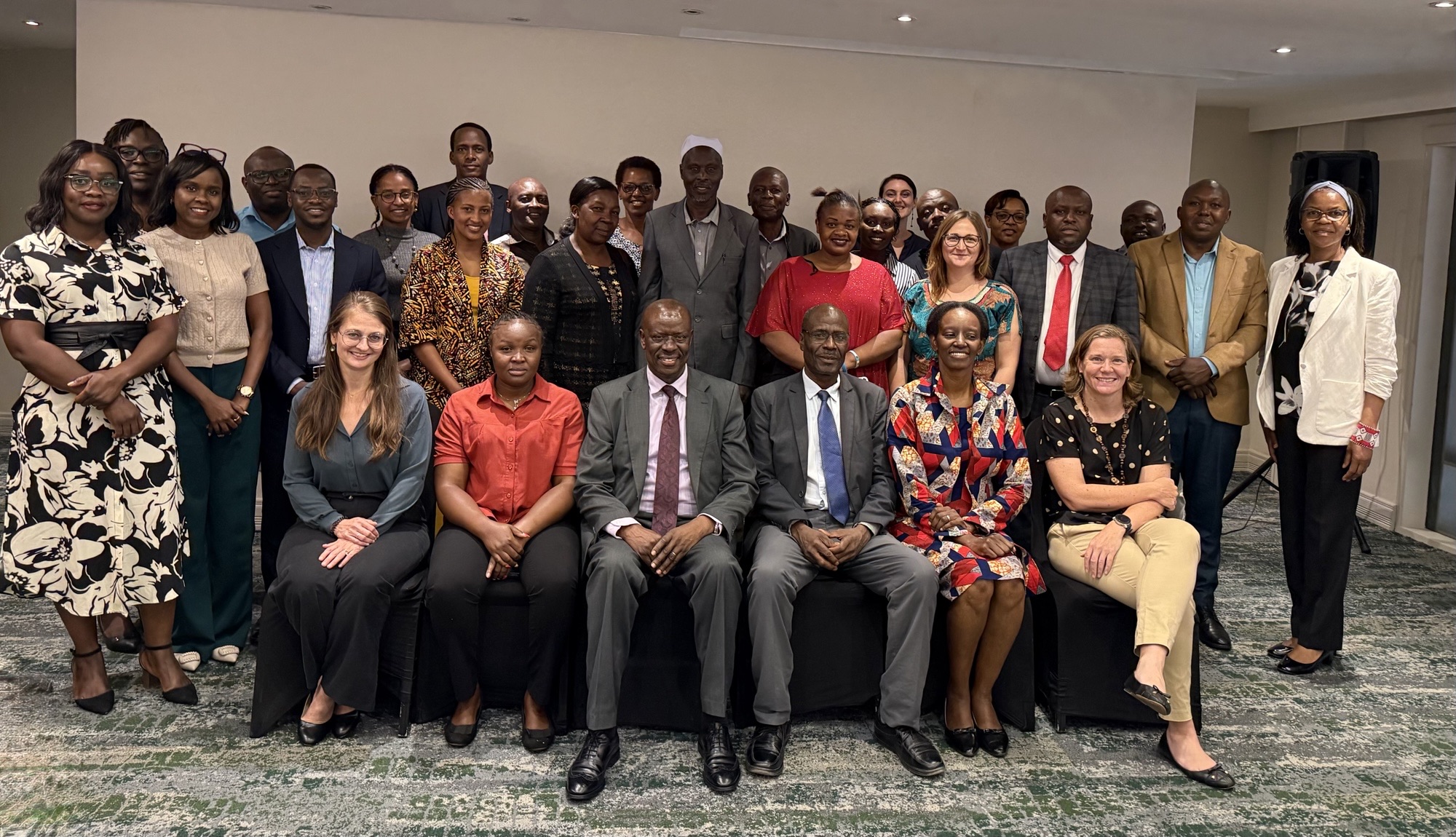
Addressing these gaps calls for stronger coordination among institutions, shared approaches to measuring results, and closer links between research and policy priorities. To advance these goals, 31 representatives from government, universities, CGIAR centers, and other research institutions met in Nairobi on October 12, 2026, for a stakeholder consultation on the proposed Agriculture and Climate Evidence (ACE) Lab.
Convened by the Ministry of Agriculture and Livestock Development (MoALD), the Kenya Agricultural and Livestock Research Organization (KALRO), Innovations for Poverty Action (IPA), and the International Food Policy Research Institute (IFPRI), the consultation sought input on the Lab's vision and explored how existing initiatives, including the CGIAR IFPRI-led Monitoring, Evaluation, Learning, and Impact Assessment Framework (MELIAF) Kenya Activator, could contribute to more coherent and policy-relevant agricultural evidence in Kenya.
Bringing evidence closer to policy decisions
The proposed ACE Lab, a joint MoALD–KALRO initiative supported by IPA, seeks to strengthen the role of evidence in agricultural policymaking by embedding research and learning functions within the institutions responsible for designing and implementing policies. Coordinated by the Directorate of Research and Innovation in the State Department for Agriculture and hosted by KALRO, the Lab would bring government agencies and research partners together to prioritize policy questions and ensure that relevant evidence is available in time to inform decisions.
The consultation discussed this proposed model and how it could build on existing research partnerships and initiatives rather than duplicate ongoing efforts.
Connecting research priorities, measurement, and impact
Among these initiatives is the CGIAR MELIAF Kenya Activator, led by IFPRI, which has been working with partners to strengthen the coherence and comparability of agricultural research in Kenya. At the consultation, the Activator presented two pieces of work that could inform the Lab's research and learning agenda.
First, it has developed a country-level theory of change that maps CGIAR and partner innovations, outcomes, and impacts to Kenya's priority challenges for agricultural development, organized around six major challenge areas and fifteen sub-challenges. The framework identifies how agricultural research and innovation are expected to contribute to development outcomes, making explicit the intermediate changes and assumptions underlying these pathways.
Developed against Kenya's Agricultural Sector Transformation and Growth Strategy (ASTGS) and the first National Agricultural Investment Plan (NAIP), and linked to the commitments of the Comprehensive Africa Agriculture Development Programme (CAADP) Kampala Declaration, the framework provides a common reference point for connecting research priorities and results to national and continental development objectives. With the launch in May 2026 of the National Agri-Food System Investment Plan (NASIP) 2026–2030, which domesticates the Kampala commitments in Kenya, the framework's pathways will next be reviewed against the new plan's flagships.
Second, the Activator is advancing the use of harmonized indicators across agricultural impact evaluations. Drawing on the CGIAR results framework, these indicators cover key development outcomes, including livelihoods, food security and nutrition, gender and social inclusion, climate adaptation, and environmental sustainability. The indicators are currently being integrated and tested across six independently designed evaluations in Kenya, covering interventions in digital agricultural advisory services, livestock management, climate-smart agriculture, rangeland restoration, and agricultural insurance.
While each evaluation addresses distinct questions, the adoption of common measures creates opportunities to compare findings across interventions and contexts. Over time, this could help move beyond individual project results toward a more comprehensive understanding of what works, for whom, and under which conditions.
The two efforts play different but complementary roles. While the Lab aims to create an institutional mechanism for identifying policy-relevant research questions and translating evidence into decisions, the Activator's theory of change and indicators can help structure research priorities, assess pathways to impact, and strengthen the comparability of results.
Towards a shared evidence agenda
Participants examined the proposed country-level theory of change, assessed its relevance to Kenya's agricultural priorities, and discussed the assumptions underlying different pathways to impact. They were also invited to distinguish between the importance of specific policy challenges and the strength of the evidence currently available to address them.
This distinction matters because the areas attracting the most research may not be those where evidence is most urgently needed, while important policy questions may remain insufficiently investigated. Identifying where high-priority challenges intersect with significant evidence gaps can provide a stronger foundation for setting a collective research and learning agenda.
Participants from universities showed strong interest in engaging with the Lab and collaborating with other stakeholders, pointing to an important role for local researchers in implementing its research agenda. The discussions also highlighted the value of the theory of change in linking research outcomes to the indicators used in national, regional, and global policy frameworks. At the same time, the discussions showed that more work is needed to make the harmonized indicators operational, including clarifying which data should be collected, what evidence already exists, and where relevant data can be found.
Discussions were facilitated by representatives from MoALD, KALRO, IPA, and IFPRI. The active involvement of government counterparts reflected the proposed Lab's aim that evidence priorities be shaped by the institutions that will act on them. Developing a shared agenda will also require continued engagement beyond this initial consultation, including with development partners, government agencies, and other institutions that were unable to attend. Offering a virtual participation option and holding bilateral conversations ahead of future meetings were identified as ways to broaden engagement.
Next steps
The plenary discussions identified possible areas of work for the Lab, including strengthening existing governance and institutional arrangements, improving coordination of agricultural research, sensitizing key stakeholders on harmonized indicators, and developing models for sharing capacity. These will be validated with a wider group of stakeholders before being included in the Lab's draft work plan.
Participants' feedback will be used to refine the theory of change, including aligning its pathways with the NASIP flagships, and to further develop the harmonized indicators, including which data to collect and where existing data and evidence can be found. IFPRI will share these as inputs to the Lab's work plan and to wider efforts to align agricultural research with Kenya's national and CAADP commitments.
Institutional mechanisms such as the ACE Lab, combined with shared frameworks for research and measurement such as those of the MELIAF Kenya Activator, could help ensure that evidence is put to better use in the policies and investments shaping Kenya's agricultural transformation.
This post is part of the Food Security Portal series on national policy dialogues supporting CAADP domestication.
Sedi Boukaka is a Research Coordinator, Agrifood Innovation and Resilience, IFPRI. Berber Kramer is a Senior Research Fellow, Markets, Trade and Institutions, IFPRI. Fredah Maina is the Agriculture Director, KALRO. David Ojigo is the Director of Agricultural Research and Innovation, MoALD. Jemima Okal is the Associate Policy Manager, IPA.